

Performing automated unit tests to verify and validate code changes is a best software practice, and one that is increasingly important with today’s rapid feature development. Often with JavaScript projects, unit tests pass as expected one at at time. But when running the whole test suite together, test failures are seen. Our Senior WebRTC Engineer, Justin Williams delves more into bleeding unit tests and how factories can help the issue.

Just like software development, software testing has its own life cycle with specific objectives and deliverables. Our expert testing team combines your application’s success criteria with our best practices in building live video apps to come up with an efficient test plan that delivers efficient, high value testing.
Fixing an existing WebRTC application is not as much fun as building a new one, but it’s often necessary. Our team typically employs a combination of four fixes: re-architecting the media server or choosing a new CPaaS, solving compounding bugs, re-architecting the application, and improving the UX and error handling.
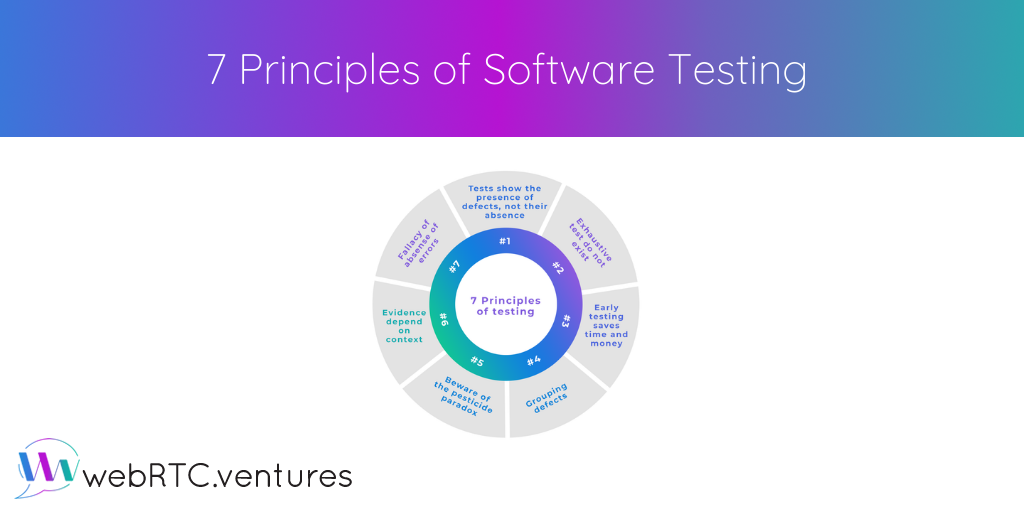
The knowledge and consideration of the ISTQB testing principles allows our testing experts to be more effective in creating individualized strategies depending on the client and the application’s particular requirements. Our Testing Manager Rafael Amberths discusses these seven principles of software testing in the second of a three-part series.


