
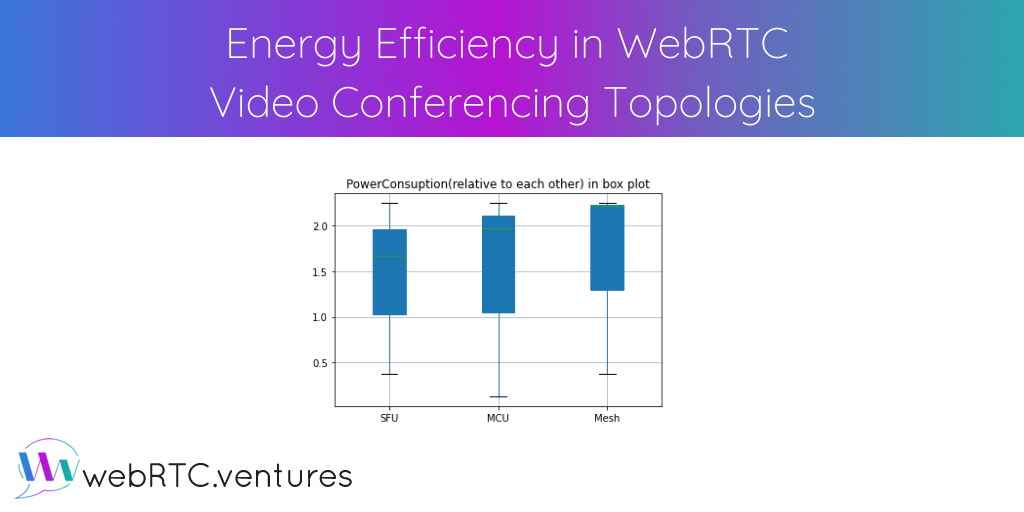
Mesh, MCU, or SFU architectures help scale WebRTC for group calls. There are advantages to each, depending on the use case and concerns around quality, cost, and network congestion. But how does each compare in terms of energy efficiency? In her last post of the series, Altanai Bisht compares server side and client side consumption in these different topologies.
MCUs are time-tested approaches to setting up conferences via bridges. Conference bridges add centralized call and media features like mixing, quality control, secure PIN-based access, and more. They are also ideal for connecting mixed streams with media pipelines for recording, broadcasting or plugging into machine learning models. Altanai shows us how to configure FreeSWITCH as a WebRTC Multipart conferencing server using a video mixer and conference bridge.

SFU has become a popular WebRTC topology for connecting through a centralized server to support a medium-sized VoIP conference. Altanai reviews the differences between Mesh, MCU and SFU for handling media streams and demonstrates Asterisk’s SFU configuration for WebRTC endpoints.

For our 57th episode of WebRTC Live, Arin Sime was joined by Anton Venema, CTO at LiveSwitch Inc for a deep dive into successfully scaling your WebRTC application in today’s technological landscape. They discussed the basics of scalability and media servers, optimizing for client vs. server efficiency, RTP packets and streams, bitrate management, the benefits of using a CPaaS to scale, and more. Watch it here!


